
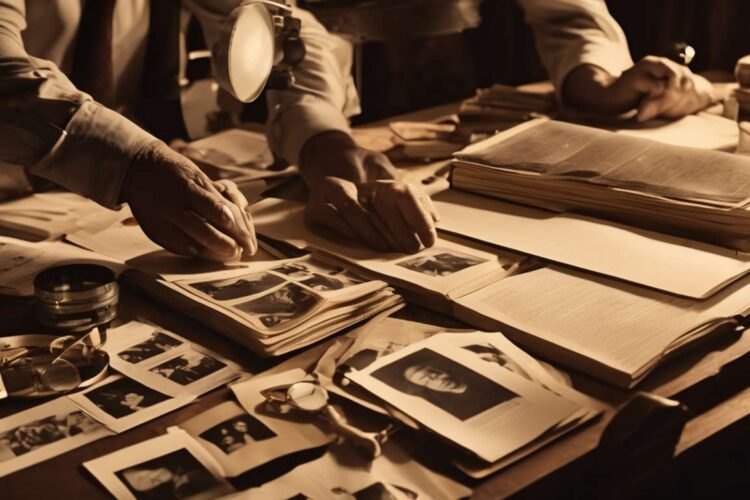
Nurturing the notion that adult entertainment is merely prurient diversion, we have long accepted a simplified tale that sidelines its cultural significance.
We now challenge that myth: rather than an isolated industry of fleeting titillation, adult media has intersected with technology, labor movements, censorship battles, and shifting social norms.
As cultural researchers, we trace how production practices, distribution networks, and audience communities reflect and shape broader historical currents.
- Examples of those currents include:
- Moral panic and legal reform.
- The evolution of intimacy in public discourse.
- Technological adoption and platform shifts.
By reframing pornography and erotic media as components of media history, we recover neglected archives, center worker voices, and examine how aesthetics and ideology travel between mainstream and marginal forms.
This recalibration does not sanitize content; it expands our analytic lens, revealing reciprocal influence between erotic media and cultural institutions.
In doing so, we invite readers to reconsider received wisdom and to recognize adult entertainment as a substantive site for understanding modern media history.
Reclaiming Archival Value
We recover and reframe adult entertainment artifacts as archival materials that reveal cultural, technological, and legal histories often ignored by mainstream archives.
We treat these items as evidence of lived experience and collective creativity, insisting that archival preservation is a form of care that honors marginalized creators and audiences.
We build inclusive repositories where people feel they belong, where memories of practice, performance, and resistance are documented with dignity.
We acknowledge intersecting narratives—race, gender, class—without reducing contributors to stereotypes, and we situate materials alongside broader media history to show continuity and change.
We track how platform censorship reshapes what survives, advocating for strategies that counteract erasures and preserve context.
We center contributors’ voices, solicit consent where possible, and share stewardship practices so communities can steward their own records.
We don’t romanticize scarcity; we act deliberately, documenting metadata, provenance, and use rights, so future researchers can understand not only the artifacts but the conditions under which they were made and silenced.
Labor and Production Histories
We examine how people who made adult entertainment—performers, producers, technicians, and managers—worked, negotiated power, and built economies under shifting legal, technological, and cultural conditions.
We trace labor histories that reveal collective strategies:
- Informal networks for safety.
- Shared funds for medical care.
- Cooperative agreements to secure fair pay.
We center voices who kept production going, documenting how roles overlapped and how experience translated into advocacy and training.
We describe efforts at archival preservation that protect memories, contracts, and day-to-day records so future researchers and community members can learn from practical precedents.
We acknowledge the stresses of platform censorship that disrupted income streams and forced rapid improvisation, and how workers adapted:
- Diversifying distribution channels.
- Forming mutual aid structures.
Throughout, we cultivate belonging by showing how solidarity and knowledge-sharing sustained livelihoods and creative practices.
We do not romanticize hardship; instead, we map concrete lessons for:
- Labor protections.
- Accessible archives.
- Policy reforms that respect dignity and community heritage.
Technology and Platform Transitions
As platforms, formats, and distribution technologies shifted, we adapted production practices, revenue models, and safety strategies to keep control over our work and livelihoods.
We remember moving from physical distribution to early web spaces, then to streaming and direct-to-fan platforms, each transition reshaping how we connected with audiences and protected our communities.
We document these changes as part of labor histories, tracing how creators reclaimed agency through:
- subscriptions
- fan funding
- diversified income streams
At the same time we prioritize archival preservation, recognizing that preserving files, metadata, and oral histories safeguards our cultural contributions and affirms belonging for future peers.
We also navigate the persistent threat of platform censorship, developing technical workarounds, community platforms, and mutual aid networks to maintain continuity and dignity.
Together we build resilient infrastructures—shared archives, cooperative platforms, and transparent policies—that reflect our values and labor.
By recording these shifts precisely, we create collective memory and practical blueprints for sustaining creative lives through ongoing technological change.
Censorship and Legal Battles
We defend expression against legal and administrative restrictions.
We’ve repeatedly fought takedowns, obscenity prosecutions, and discriminatory legislation that limit expression, challenging these actions through legal and administrative efforts.
We protect cultural memory and archival preservation.
We recognize these battles shape more than individual creators: they determine whether archival preservation survives, whether labor histories are recorded, and whether communities remain visible.
We fund and organize collective resistance.
- We organize legal funds.
- We share documentation.
- We build networks that resist platform censorship while pursuing regulatory remedies.
We preserve disputed materials and contextualize removals.
- We preserve disputed materials in secure, accessible collections.
- We collaborate with scholars to contextualize removals as part of media history.
We document workplace struggles for future research.
We document workplace struggles so future researchers can trace how workers negotiated rights, health, and representation.
We demand transparency and pursue litigation when necessary.
- We push for transparent appeals on platforms.
- We demand non-discriminatory enforcement.
- We litigate where necessary to set precedents.
We center mutual aid and collective memory.
We combine legal strategy with collective memory work so our histories aren’t erased.
We sustain belonging and protect labor through defense of expression.
By defending expression and the means to preserve it, we sustain belonging, protect precarious labor, and ensure that adult entertainment is treated as a significant strand of cultural and media history.
Audience Communities and Cultures
We explore how diverse audiences form communities around adult entertainment, shaping meanings, norms, and cultural practices through shared consumption, discussion, and creative remixing.
We gather in forums, fan groups, and local meetups to create spaces where members feel seen and valued.
We document our practices and contribute to archival preservation projects, insisting that the histories we build include unpaid and invisible contributions.
We center labor histories so we remember makers, performers, and platform workers whose work sustains these cultures.
We challenge platform censorship that erases content and fragments communities, and we develop strategies to keep our shared memory intact:
- Mirrors
- Decentralized archives
- Cooperative platforms
We value mutual aid by sharing resources, moderating respectfully, and teaching newcomers the norms that foster trust.
We’re intentional about consent, accessibility, and intergenerational exchange, recognizing that inclusion strengthens resilience.
By treating audience communities as cultural actors with archives, voices, and care practices, we reclaim narrative authority and ensure our shared heritage informs broader media history.
Aesthetics Across Media Forms
We trace how visual styles, sound design, editing rhythms, and distribution formats shape erotic meaning across film, photography, streaming, text, and live performance.
We map how grain, framing, ambient noise, cuts, and platform interfaces create affective registers that audiences recognize and return to.
We situate aesthetic choices within archival preservation practices so communities can reclaim lost forms and understand lineage.
We connect shifts in technique to labor histories, acknowledging performers, technicians, and curators whose craft produces recognizable genres and shared vocabularies.
We examine how platform censorship alters both form and reception, forcing creators to adapt rhythms, euphemisms, and image economy to survive.
We cultivate a welcoming analytic space that invites readers to see themselves in these continuities, offering precise tools to read style without moralizing.
We propose methodologies that pair close formal analysis with institutional context, so belonging isn’t nostalgia but an accountable practice.
- Key methodological commitments:
- Preserve artifacts: document, digitize, and archive materials so marginalized practices are recoverable.
- Honor workers: record oral histories and credit labor to restore invisible contributions to aesthetic forms.
- Track circulation: map how aesthetic norms move and mutate across media and platforms.
These practices together aim to preserve, contextualize, and explain how aesthetic choices and institutional conditions co-produce erotic meaning across time and media.
Mainstream and Marginal Flows
We trace how mainstream aesthetics, distribution channels, and regulatory pressures flow into and away from marginal scenes, reshaping styles, audiences, and the economic terms of visibility.
We map exchanges where underground producers borrow polish and reach, while mainstream circuits appropriate niche affect and authenticity.
We note how archival preservation becomes a collective practice: community-run repositories rescue marginalized works and counter erasures that platform censorship can create.
We center labor histories to show who builds infrastructure, who’s marginalized by demonetization, and how care networks sustain practitioners when formal protections fail.
We emphasize reciprocal audience formation.
- People move between scenes looking for belonging.
- Scenes adapt to welcome or exclude newcomers.
By attending to circulation rather than fixed categories, we reveal pragmatic strategies communities use to claim room to exist.
- Alternative payment systems
- Peer-led curation
- Shared archives
This focus helps us connect to ongoing struggles over taste, rights, and memory, and it points to concrete interventions that strengthen collective cultural stewardship.
Methodologies for Ethical Study
Principles: consent, harm reduction, and reciprocal accountability.
We prioritize consent, harm reduction, and reciprocal accountability in all research designs and practices. These principles guide every stage of work — from project conception through dissemination — to ensure research is ethical, respectful, and beneficial to participants.
Centering creators, workers, and communities through co-designed methods.
- Co-design interviews and methods with participants so research questions and processes reflect their priorities.
- Share findings in accessible formats and venues chosen with participants.
- Ensure participants control how their stories circulate (placement, timing, anonymity options).
Archival preservation that respects privacy and provenance.
- Commit to preserving materials so histories survive while minimizing exposure and risk.
- Use provenance-aware cataloging and consented access levels.
- Employ techniques (redaction, controlled access, embargoes) that balance preservation and privacy.
Collaborative documentation of labor histories and networks of care.
We document labor histories collaboratively, recognizing networks of care, precarity, and skill, and honor contributors as co-authors of history rather than mere subjects.
Rigorous, solidarity-driven examination of platform censorship.
- Trace policy impacts on livelihoods, expression, and community cohesion.
- Resist voyeuristic sensationalism by focusing on structural effects and participant experiences.
- Partner with affected communities for advocacy and accountability.
Calibrated mixed methods to minimize harm and maximize community benefit.
Our mixed methods — oral histories, participatory archives, policy analysis, and digital ethnography — are selected and adapted to reduce risk and increase community value.
Transparent governance: consent protocols, data practices, and restitution.
- Cultivate transparent consent protocols that are revisited over time.
- Implement clear data governance practices (storage, access, retention).
- Establish restitution plans (compensation, community resources, rights restoration).
Ongoing ethics as practice: revisiting and reinforcing accountability.
We routinely revisit ethics with participants, centering belonging and mutual accountability, so ethical study remains both rigorous and restorative.
How do researchers protect the privacy and consent of individuals whose personal stories or images might surface during archival work?
We ask how researchers protect privacy and consent when personal stories or images surface during archival work.
We prioritize anonymizing materials, obtaining informed consent when possible, and consulting communities represented.
When sensitive material is encountered, we use access restrictions, redaction, and secure storage.
We plan for potential harms and invite collaborators to review uses of sensitive content.
We commit to transparency, accountability, and revisiting permissions as contexts or relationships evolve.
What funding sources are available for long-term preservation of adult entertainment artifacts without compromising independence or ethics?
Question: What funding sources support long-term preservation of adult entertainment artifacts without compromising independence or ethics?
Answer — Preferred mixed funding model
1. Community-driven support
- Crowdfunding campaigns for specific projects or acquisitions.
- Membership fees (tiered benefits) to create reliable recurring income.
- Donor circles (small, vetted groups) for larger gifts without corporate influence.
These sources build community ownership and reduce dependency on a single funder.
2. Foundation grants with safeguards
- Seek grants from foundations that fund archives, cultural heritage, or LGBTQ+/sex-worker initiatives.
- Require strict disclosure and written terms ensuring no editorial control or conditional demands.
- Publicly disclose grant sources and terms.
3. University and research partnerships
- Collaborate with academic institutions for expertise, preservation infrastructure, and student labor.
- Insist on autonomy agreements that preserve curatorial control, researcher access terms, and privacy protections.
4. Government arts and archival grants
- Apply for public arts, cultural heritage, or archival funding where available.
- Accept only when grants explicitly respect privacy, consent, and non-censorship clauses.
5. Earned income (ethical revenue)
- Generate revenue through ethically managed access, licensing, digitization services, exhibitions, and publications.
- Implement clear consent and privacy policies for materials used commercially.
- Avoid monetization methods that exploit subjects or commodify content against consent.
Governance and ethical safeguards
- Transparency: publish funding sources, major donors, and grant conditions.
- Consent standards: enforce clear consent, take-down, and privacy protocols for all materials.
- Refusal policy: formally refuse conditional funding that threatens independence, requires censorship, or compromises ethics.
- Conflict-of-interest rules: board and staff disclose relationships with funders and recuse as needed.
SummaryA diversified funding mix — community support, foundation and public grants with enforceable safeguards, university partnerships with autonomy clauses, and ethically managed earned income — combined with transparency, consent protections, and a formal refusal policy, supports long-term preservation without compromising independence or ethics.
How do cross-cultural comparisons address differing legal definitions and social stigmas around adult entertainment?
We see the Current Question about cross-cultural comparisons of legal definitions and social stigmas around adult entertainment.
We acknowledge varied laws and norms, so we compare statutes, case law, and enforcement practices while centering lived experiences and community voices.
We highlight power dynamics, historical contexts, and advocacy efforts, and we resist moralizing.
We foster mutual respect, share resources, and build networks that support ethical, inclusive preservation and research across borders.
Conclusion
You’ve seen how adult entertainment deserves serious archival attention, not dismissal, and how its labor, tech shifts, censorship fights, audiences, and aesthetics map broader media history.
By tracing mainstream and marginal flows and using ethical, sensitive methods, you’ll reframe porn as cultural documentation that reveals power, creativity, and change.
Keep studying with rigor and respect so this often-hidden archive can inform media scholarship, policy, and public understanding for years to come.