
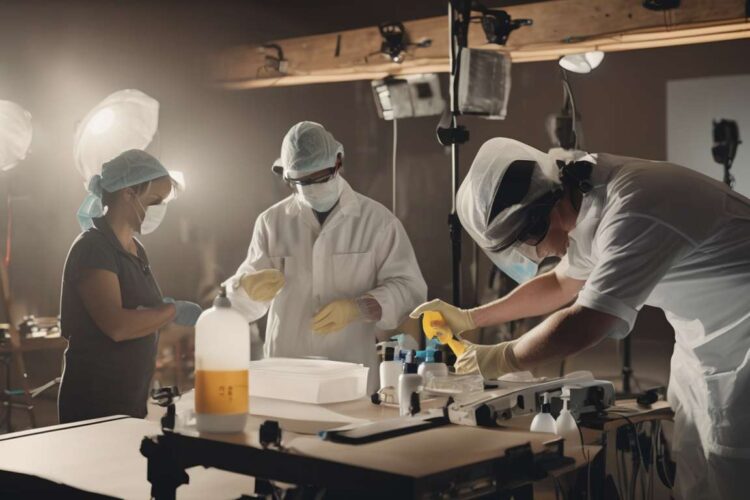
We have identified an unexpected but useful parallel between food‑safety frameworks and the protocols that protect performers in adult entertainment.
Key idea: adopting clear, measurable production standards—modeled on industries where health, consent, and documentation are routine—can raise safety, professionalism, and dignity on set.
How this translation works:
- Sanitation checklists become tailored hygiene and STI‑prevention protocols.
- Hazard assessments become scene‑specific risk assessments that consider physical, emotional, and legal risks.
- Mandatory training becomes role‑appropriate education in consent, communication, de‑escalation, and medical response.
Practical goals:
- Develop standards that are enforceable, transparent, and collaboratively created by performers, producers, and regulators.
- Create measurable criteria and routine audits to verify compliance.
- Provide accessible reporting mechanisms so incidents are documented and addressed promptly.
Expected outcomes:
- Clear expectations for everyone on set.
- Reduced harm through prevention and rapid response.
- Enhanced respect for performers’ autonomy and boundaries.
- Greater accountability across production levels without unduly constraining artistic expression.
Next steps (recommended):
- Convene a working group of performers, producers, health professionals, and legal/regulatory representatives.
- Draft modular standards that can be adapted to different production sizes and genres.
- Pilot the standards on a small number of productions, with routine audits and feedback loops.
- Refine and scale based on pilot results, creating public documentation and training resources.
Conclusion: Translating established public‑health and safety tools into the context of adult work offers a pragmatic path to environments where consent is informed, boundaries are honored, and incidents are handled transparently and respectfully.
Purpose and Scope
Purpose and Scope — who this applies to and what it covers
We define who these standards apply to, what activities they cover, and the boundaries of our responsibilities so everyone involved knows where they fit.
Our aim is to create practical expectations for performers, production staff, and support personnel who choose to work within these environments.
Consent as a foundation
We prioritize consent protocols as a foundational element, ensuring mutual agreement and ongoing affirmative communication.
- Consent is required before any activity begins.
- Consent must be clear, voluntary, and revocable at any time.
- Ongoing check‑ins and affirmative communication are expected throughout activities.
Health and safety commitments
We commit to health & safety measures that protect physical and emotional wellbeing on set, and we describe when and how those measures apply.
- Physical safety measures (e.g., PPE, hazard mitigation, first aid).
- Emotional safety measures (e.g., wellbeing breaks, access to support staff).
- Clear conditions for pausing or stopping activities for safety reasons.
Compliance and accountability
We require regular compliance audits to verify adherence, provide transparency, and identify areas for improvement.
- Audits are scheduled and documented.
- Findings are shared with stakeholders and inform corrective actions.
- Audit processes maintain confidentiality where appropriate.
Operational framing, not task assignment
This section doesn’t assign individual tasks; it defines the operational frame that supports respectful collaboration and shared accountability.
Clarity on coverage and authority
By being specific about covered activities, locations, and limits of our authority, we make it easier for people to belong to a community that values dignity, professional standards, and collective care.
Stakeholder Roles
We will define roles and responsibilities for performers, production staff, and support personnel so everyone understands their duties, decision-making authority, and channels for raising concerns.
Specific expectations for each role will be outlined so responsibilities are clear and actionable:
-
Performers
- Manage personal boundaries and communication.
- Know how to raise concerns and whom to contact.
-
Producers
- Coordinate schedules and resources.
- Conduct compliance audits and ensure policies are followed.
-
Directors
- Provide artistic direction while upholding policies.
- Make creative decisions within established protocols.
-
Stage managers
- Handle logistics and day-to-day coordination.
- Implement and communicate schedule and safety changes.
-
Medical and wellness staff
- Oversee health and safety matters.
- Provide immediate care and preventative support.
-
Designated liaisons
- Receive reports and facilitate conflict resolution.
- Act as confidential points of contact for concerns.
We will create clear reporting lines and accessible role descriptions so anyone can raise concerns without fear and so role expectations foster trust and inclusion.
Documentation will include:
- Training requirements.
- Emergency contacts.
- Decision-making protocols.
Consent protocols will be referenced and supported by role enforcement (detailed consent protocols are documented elsewhere, and roles will be structured to support their implementation).
We commit to ongoing review and collaboration:
- Regular reviews of role descriptions and procedures.
- Role-specific feedback mechanisms.
- Collaborative updates so stakeholders feel valued, informed, and empowered to contribute to a safe, respectful production environment.
Consent Protocols
We’ll establish clear, enforceable consent procedures that require informed, voluntary agreement from performers before, during, and after any scene.
We’ll create standardized consent protocols that outline:
- verbal and nonverbal checks,
- safe-word systems,
- documented revocation steps,
so everyone feels seen and supported.
We’ll train all staff to honor boundaries, pause production immediately on any concern, and debrief participants to confirm ongoing comfort.
We’ll provide accessible consent forms and quick-reference cards so consent is never assumed and always recorded.
We’ll integrate consent protocols into broader health & safety planning, ensuring medical confidentiality and access to resources without stigmatization.
We’ll schedule regular refreshers to keep practices current and culturally competent, reinforcing a community where mutual respect is the norm.
We’ll conduct compliance audits to verify documentation, incident response, and training completion, sharing findings transparently and acting on gaps.
We’ll foster an environment where belonging and accountability coexist, and where consent is practiced, documented, and enforced consistently.
Health and Hygiene
Health and hygiene standards:
We will set clear, evidence-based standards that require routine testing, sanitation protocols, vaccination access, and confidential medical support for all performers and staff.
Regular screening and access to care:
- We maintain regular screening schedules and fast access to care.
- We provide secure channels to report concerns without fear.
- We align practices with consent protocols so medical status and boundaries inform participation.
Confidentiality:
We ensure testing results and medical disclosures are handled with strict confidentiality.
Sanitation and cleaning protocols:
- We commit to rigorous cleaning of sets, shared facilities, and equipment using approved disinfectants.
- We document procedures that protect everyone’s dignity.
Training and education:
- We provide training so every team member understands basic health and safety expectations and hand hygiene.
- Training includes how to support colleagues seeking care.
Compliance and accountability:
- We schedule periodic compliance audits to verify records, sanitation logs, and training completion.
- We act transparently on audit findings.
Underlying principle:
By centering collective wellbeing, accessible resources, and mutual accountability, we create a workplace where people belong, feel safe to work, and trust that their health is respected.
Risk Assessments
We conduct regular, documented risk assessments that identify potential physical, sexual, and psychological hazards on set and outline practical measures to mitigate them.
We involve performers, crew, and coordinators in assessing scenes, locations, and equipment so everyone feels seen and responsible.
Our assessments map risks to clear actions, including:
- adjustments to lighting or staging,
- explicit consent protocols,
- readily available health & safety measures (e.g., sanitization stations and private rest areas).
We record responsibilities and maintain review schedules by documenting who’s responsible for each mitigation, setting review dates, and keeping documentation accessible to the team.
We integrate risk findings into scheduling and scene design to reduce fatigue and stressors, and we plan alternatives if someone withdraws consent or raises concerns.
We perform regular compliance audits to verify that mitigations are implemented and effective, and we use audit results to refine processes.
By sharing assessments transparently and addressing issues promptly, we strengthen trust, protect well-being, and ensure productions run ethically and sustainably.
Training Requirements
Comprehensive, role-specific training
We require comprehensive, role-specific training that equips performers, crew, and coordinators with the skills to recognize hazards, respect boundaries, and respond to incidents.
Concise, focused modules
We design concise modules that cover:
- consent protocols,
- de-escalation techniques,
- basic first aid
so everyone feels supported and capable.
Blended learning approach
Training sessions blend scenario-based practice with clear policies, ensuring each team member knows their responsibilities and where to turn for guidance.
Regular refreshers and accessible resources
We reinforce health and safety through regular refreshers and accessible resources, creating a culture where asking questions is encouraged and belonging is prioritized.
Non-shaming tracking and adaptable content
Trainers track completion and competency without shaming, and we adapt content to reflect diverse experiences and needs.
Preparedness for external review
We prepare teams for external review: records, assessments, and exercises align with compliance audits to demonstrate consistent standards.
Outcomes of ongoing education
By committing to ongoing education, we strengthen trust, reduce risk, and build a collaborative environment where safety, dignity, and professional growth are integral to every production.
Reporting Mechanisms
Clear, confidential reporting channels.
We will maintain channels that let performers and crew quickly raise concerns, document incidents, and get timely support.
-
Multiple accessible options are available:
- Anonymous digital forms
- Designated ombudspersons
- A confidential hotline
-
Reports are triaged promptly, routed to trained responders, and logged with care to protect privacy while preserving necessary details for investigations.
Transparency and survivor-centered follow-up.
We center community trust by explaining expected timelines, follow-up steps, and available support resources.
-
Support includes:
- Medical referrals tied to health & safety needs
- Mental health care resources
-
Reports are tied to consent protocols so breaches are addressed consistently and survivors see concrete responses.
Data use for prevention and cooperation.
We record systemic patterns to inform prevention while protecting identities.
-
Aggregate findings are used to:
- Identify recurring issues
- Inform training and policy changes
- Improve safety measures
-
We cooperate with external partners when appropriate.
Documentation and shared responsibility.
We maintain documentation that supports future compliance audits, ensuring transparency about our procedures and outcomes.
We encourage reporting as a shared responsibility, assuring people they belong here and will be heard and protected.
Audit and Compliance
We will conduct regular, independent audits and internal reviews to verify that policies are followed, incidents are handled appropriately, and corrective actions are implemented.
Audit timing and triggers
- We’ll schedule compliance audits at predictable intervals.
- We’ll also run audits after any reportable event so everyone knows when and how assessments happen.
Consent and documentation
- We review consent protocols line-by-line.
- We confirm documentation is current.
- We ensure participants’ choices are respected in practice, not just on paper.
Health & safety verification
- We examine health and safety measures — from on-set hygiene to emergency response.
- We test that training translates to action.
Participatory approach
- We involve team representatives in audits to build shared ownership and surface practical improvements.
- We protect confidentiality and prevent retaliation for raising issues, reinforcing belonging for everyone who participates.
Tracking, remediation, and verification
- We track findings and assign responsibilities.
- We set measurable deadlines for remediation.
- We verify completion.
Transparency and privacy
- We publish summarized audit outcomes to maintain transparency and trust.
- We keep individual privacy protected.
By making compliance audits routine, clear, and participatory, we strengthen safety, consent, and collective responsibility across production.
What measures are in place to support the mental health and long-term wellbeing of performers after they leave the industry?
We prioritize lifelong wellbeing for performers after they leave the industry.
Support services include:
- Counseling referrals.
- Alumni peer groups.
- Career transition coaching.
- Financial planning workshops.
Practical assistance connects people with:
- Healthcare navigators.
- Legal aid.
- Mentoring networks to reduce isolation.
Accessibility and confidentiality are maintained: resources are kept accessible online and confidential.
Advocacy focus: we work to destigmatize policies so everyone can rebuild careers and lives with dignity and community.
How are disputes over pay, royalties, or intellectual property rights resolved, and what recourse do performers have if contractual terms are violated?
We ask how pay, royalties, and IP disputes get resolved, and we expect fair recourse when contracts are broken.
We use clear contracts, mediation, and arbitration clauses first, then pursue litigation if needed.
Key steps:
- Draft clear contracts that define pay, royalty splits, IP ownership, and dispute-resolution processes.
- Include mediation and arbitration clauses to encourage early, lower-cost resolution.
- Pursue litigation when alternative dispute resolution fails or swift injunctive relief is necessary.
We support pooled legal resources, union or advocacy representation, and transparent accounting audits.
- Pooled legal resources to reduce individual costs and increase access to counsel.
- Union or advocacy representation to provide collective bargaining power and formal support.
- Transparent accounting audits to verify royalty payments and detect discrepancies.
We’ll document breaches, seek injunctions or damages, and lean on community networks for pressure and support to ensure accountability and restitution.
Action items when a breach occurs:
- Document breaches thoroughly with dates, communications, and evidence.
- Seek injunctive relief to stop ongoing harm when necessary.
- Pursue damages to recover unpaid sums or losses.
- Mobilize community networks for reputational pressure, support, and resource-sharing.
Overall principle: combine clear preventive measures (contracts, audits, representation) with a staged response (mediation → arbitration → litigation) and community-backed enforcement to ensure fair outcomes.
Are there policies governing the use of artificial intelligence, deepfakes, or image manipulation that involve a performer’s likeness, and how is consent for such uses obtained and documented?
Question: Do policies cover AI, deepfakes, or image manipulation using a performer’s likeness, and how is consent obtained and recorded?
Answer: Yes — policies explicitly prohibit unauthorized synthetic or manipulated use of a performer’s likeness and require explicit, revocable written consent for any AI-generated or otherwise manipulated content.
Required consent details:
- Scope. Consent must define what types of manipulation are permitted (e.g., voice-only, facial reenactment, entire-body synthesis).
- Duration. Consent must state how long the consent applies (fixed term or perpetual with clear revocation mechanics).
- Compensation. Any payment, royalties, or revenue-sharing terms must be documented.
How consent is obtained and recorded:
- Signed addenda. Consent is captured in written addenda to the performer’s contract that specifically address AI/deepfake/image manipulation uses.
- Timestamps. All consent documents are timestamped at the moment of signing.
- Secure storage. Documents are stored in secure, access-controlled systems with backups.
- Audit logs. Access, changes, and use of consent records are logged for transparency and compliance.
Performer rights and safeguards:
- Revocation/withdrawal procedures. Performers are given a clear, documented process to withdraw consent; the practical effects (e.g., existing distributed content vs. future uses) are specified.
- Dispute resolution. Contracts include dispute-resolution paths (e.g., mediation/arbitration) for disagreements over consent scope or misuse.
- Transparency and safety. Regular audits and accessible logs ensure uses align with the documented consent and policy.
Summary: Unauthorized synthetic use is forbidden; explicit, revocable written consent with scope, duration, and compensation must be obtained, securely recorded (signed addenda, timestamps, secure storage), and accompanied by withdrawal procedures, dispute-resolution mechanisms, and audit logs to maintain transparency and performer safety.
Conclusion
You’ve now got a clear framework to keep adult entertainment production safe, respectful, and compliant.
By knowing your role, following consent protocols, prioritizing health and hygiene, conducting regular risk assessments, getting proper training, and using reporting and audit systems, you protect performers, crew, and the production’s integrity.
Keep communicating openly, updating practices as laws and standards evolve, and holding everyone accountable — that’s how you sustain ethical, professional work.